Traveling Italy in March? Don’t Miss Zeppola di San Giuseppe — Italy’s Famous St. Joseph Pastry
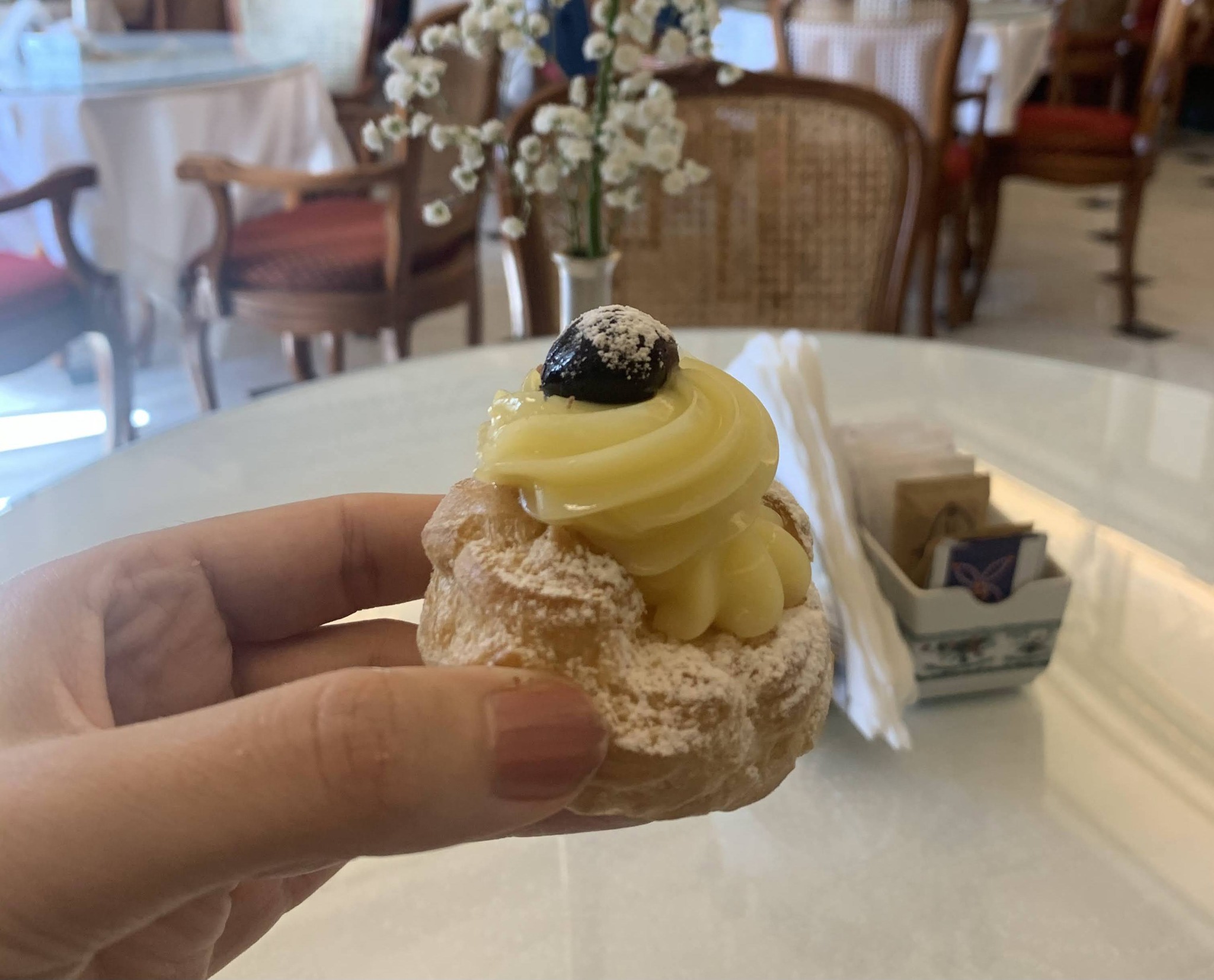
Golden, cream-filled, and topped with a jewel-like cherry—zeppola di San Giuseppe is Italy’s most delicious March tradition, and once you taste this iconic St Joseph pastry in Naples, you’ll understand why Italians wait all year for it.
THIS POST MAY CONTAIN COMPENSATED LINKS. PLEASE READ MY DISCLAIMER FOR MORE INFO.
The Sweetest Tradition of March in Italy
If you travel to Italy in March, bakery windows begin to display something irresistible: perfectly piped pastries dusted with powdered sugar, filled with silky custard, and crowned with a glossy cherry.
These are zeppole di San Giuseppe—Italy’s beloved St Joseph pastries traditionally prepared for St. Joseph’s Day on March 19.
As someone who loves trying authentic cultural food on my travels, I always make a point of tasting local specialties. And since I also have a serious sweet tooth, discovering regional desserts is easily one of my favorite travel experiences.
So when I visited Naples, trying zeppola di San Giuseppe (zeppola sg., zeppole pl.) quickly became a priority.
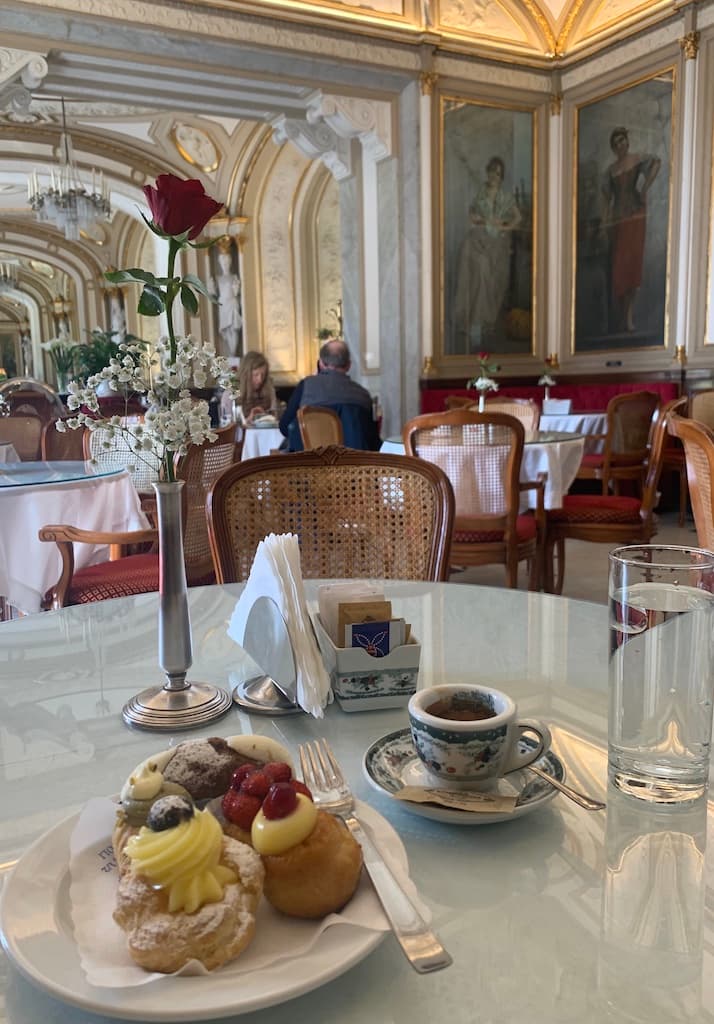
I finally had my first zeppola di San Giuseppe at Caffè Gambrinus, Naples’ historic café just steps from Piazza del Plebiscito. And the moment I tasted it, I understood why these St Joseph pastries are considered one of thebest traditional Italian desserts.
What Is Zeppola di San Giuseppe?
A zeppola di San Giuseppe is a traditional Italian pastry made from pâte à choux dough, shaped into a ring, fried or baked, and filled with luscious pastry cream.
The finished dessert looks almost like an elegant donut or delicate cake, topped with powdered sugar and a bright amarena cherry.
In Italian bakeries, you’ll hear both forms:
- Zeppola di San Giuseppe – singular
- Zeppole di San Giuseppe – plural
These iconic St Joseph cakes are among the most famous Italian pastries, and they appear across southern Italy every March.
Tasting Zeppola di San Giuseppe in Naples
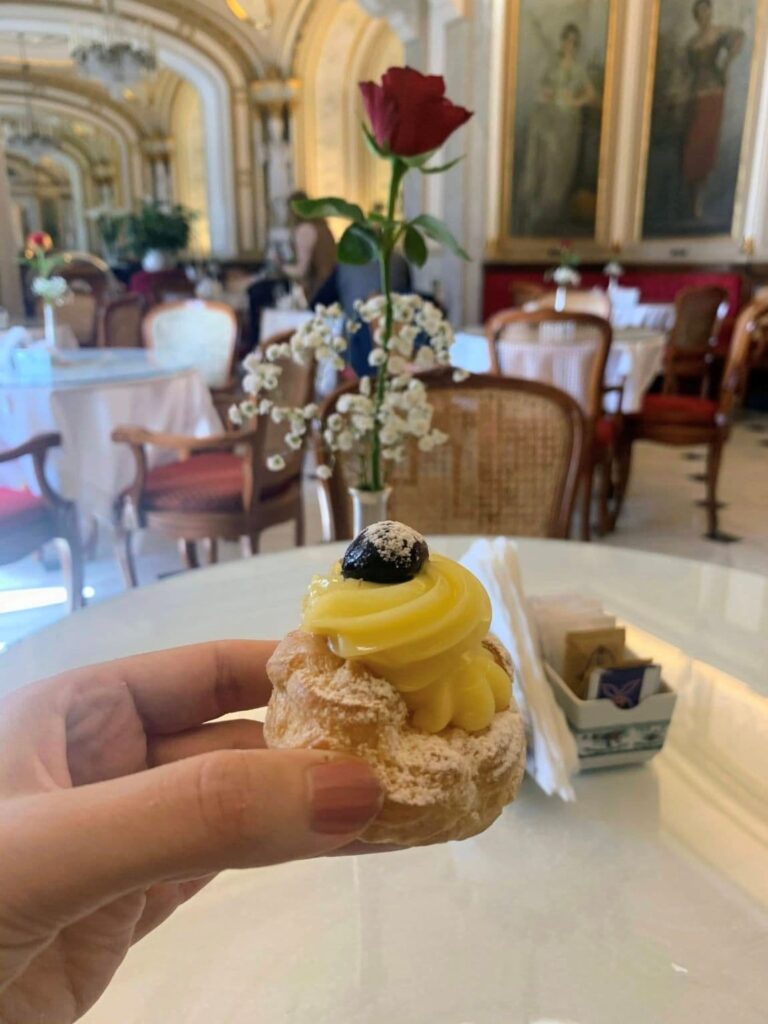
Trying this legendary St Joseph’s Day pastry in Naples is a sensory experience.
At Caffè Gambrinus, one of the city’s most historic cafés, my zeppola di San Giuseppe arrived looking almost too beautiful to eat.
The pastry was golden and airy, piped into a delicate ring. The center held a generous swirl of creamy crema pasticcera, and on top sat the traditional cherry.
One bite delivered layers of flavor:
- light, crisp pastry
- rich vanilla custard
- subtle sweetness
- the slightly tart cherry
Despite being indulgent, the pastry felt surprisingly light. It’s easy to understand why locals proudly consider zeppole San Giuseppe a national treasure.
The History of Zeppola di San Giuseppe
The story of zeppole di San Giuseppe begins in Naples.
The first documented traditional zeppole recipe appeared in 1837 in “Trattato di Cucina Teorico-Pratica” (Treatise on Theoretical and Practical Cuisine) written by Ippolito Cavalcanti, a nobleman and food writer from Naples.
Just a few years later, around 1840, the pastry became widely popular thanks to the Neapolitan pastry chef Don Pasquale Pintauro, who helped transform it into the iconic St Joseph pastry we know today.
Historically, street vendors in Naples sold fried zeppole during festivals, filling the streets with the smell of warm dough and sugar.
Today, these St Joseph pastries remain one of the most beloved traditions of the Campania region.
Why Zeppole Are Made for St. Joseph’s Day
March 19 marks St. Joseph’s Day, a celebration honoring Saint Joseph, the foster father of Jesus.
In Italy, the day also coincides with Father’s Day, making the dessert even more symbolic.
Preparing zeppole di San Giuseppe became a culinary tribute to the saint, and families traditionally enjoy these St Joseph cakes together.
Throughout Italy, bakeries produce thousands of these St Joseph pastries, turning the day into a sweet national celebration.
An Interesting Fact: Even Goethe Wrote About Zeppole
The fame of Italian zeppoles goes back centuries.
During his travels in Italy in the late 18th century, the famous German writer Johann Wolfgang von Goethe in his Italian Journey (Italienische Reise) described the festive atmosphere in Naples, where vendors fried pastries in the streets during the celebration on March 19, 1787.
He wrote about the joy of the crowd and the irresistible fried sweets being prepared—early references believed to describe what we now know as fried zeppole.
This glimpse from history shows how deeply rooted these pastries are in Neapolitan culture.
Where to Try the Best Zeppole di San Giuseppe
To experience the best zeppole san Giuseppe, head to Naples and the Campania region, where the dessert was born.
Top places to try them include:
- historic cafés in Naples
- traditional pasticcerie (Italian pastry shops)
- neighborhood bakeries during the March celebrations
If you want to taste authentic Italian zeppole in Naples, consider joining the Street Food in Naples with 6 Stops and Limoncello food tour. This guided experience takes you through the lively streets of the historic center while sampling some of the city’s most iconic dishes.
And of course, trying one at Caffè Gambrinus is an unforgettable introduction to this St Joseph’s Day pastry. Read more: Best Things to Do in Naples Italy, and How to Spend One Perfect Day in Naples, Italy.
Zeppole Main Ingredients
One reason the authentic Italian zeppole recipe remains so popular is its simplicity.
The classic zeppole main ingredients include:
- flour
- butter
- eggs
- water
- sugar
- pastry cream (crema pasticcera)
- amarena cherry
From these basic ingredients comes one of Italy’s most iconic traditional Italian desserts.
Fried Zeppole vs Baked Zeppole
When ordering St Joseph zeppole, you may see two variations.
Fried Zeppole
The original and most traditional version.
These fried zeppole are crispy on the outside and airy inside, similar to delicate zeppole donuts filled with custard.
Baked Zeppole
A lighter option and modern version.
Baked zeppole use the same dough but are baked in the oven, creating a texture closer to cream puffs.
Both are delicious, though many pastry lovers believe the traditional zeppole recipe should always be fried.
Variants of Zeppole di San Giuseppe
While the classic zeppola di San Giuseppe features pastry cream and a cherry, modern bakeries sometimes create variations.
Some versions of Italian zeppoles include:
- chocolate cream filling
- ricotta filling
- pistachio cream
- lemon custard
- mini zeppole donuts
Still, the original custard-filled St Joseph pastry remains the most iconic.
Calories in Zeppole (But Worth It)
Travelers often wonder about the calories in zeppole.
A typical zeppola di San Giuseppe usually contains around 250–350 calories, depending on size and whether it’s fried or baked.
But when you’re exploring Italy—and especially Naples—this is definitely a dessert worth indulging in.
How to Make Zeppoles at Home
Falling in love with Italian zeppoles often inspires travelers to try making zeppoles themselves.
A typical zeppole recipe involves:
- preparing choux pastry dough
- piping the dough into rings
- frying or baking the pastry
- filling it with pastry cream
- topping it with powdered sugar and a cherry
Searching for an authentic Italian zeppole recipe will reveal many variations, but the Neapolitan version remains the classic.
Why Zeppola di San Giuseppe Is a Must-Try Dessert
Food is one of the best ways to understand a place.
And few desserts capture the spirit of southern Italy like zeppole di San Giuseppe.
They are festive, historical, indulgent, and deeply rooted in local culture. From their origins in Naples to their celebration on March 19, these St Joseph pastries represent one of Italy’s sweetest traditions.
So if you find yourself wandering through Italy, especially Naples or anywhere in Campania, in March, follow the scent of sugar and pastry.
Order a zeppola di San Giuseppe, take a bite, and enjoy one of the most delicious traditions in Italy.
Food Tour To Try Zeppole di San Giuseppe in Naples:
My Go-To Accommodation Platforms:
Booking.com (short stays) and Vrbo (longer stays)

- Villa Timeo Returns in Style: Taormina’s Glamorous Sicilian Comeback This May - May 1, 2026
- Stop Guessing Where to Stay in Cinque Terre — Pick the Perfect Town for Your Travel Style (Before It’s Too Late) - April 30, 2026
- Italy’s Most Beautiful Ancient Ruins Are Hiding in Sicily — And Almost No One Visits Them - April 28, 2026